Table of Contents
Animal Crossing: New Horizons
Quick Answer
Animal Crossing: New Horizons is one of Nintendo’s most successful life simulation games, offering a relaxing experience centered on creativity, exploration, and building your own island community. Even years after its release, it remains an excellent choice for players who enjoy slow-paced gameplay, decorating, collecting items, fishing, bug catching, and customizing nearly every part of their island. While it may not appeal to players looking for fast action or intense combat, it continues to be one of the most enjoyable cozy games available on the Nintendo Switch.
What Is Animal Crossing: New Horizons?
Some games challenge your reflexes. Others test your strategy. Animal Crossing: New Horizons does something completely different—it encourages you to slow down.
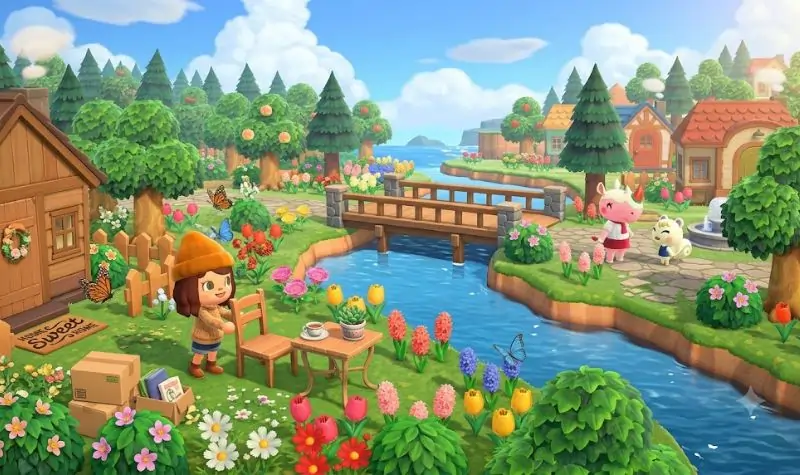
Instead of saving the world or defeating powerful enemies, you begin with a small deserted island and gradually transform it into a place that feels uniquely yours. Every tree you plant, every bridge you build, every house you decorate, and every villager you welcome helps shape an island that reflects your own creativity.
Released exclusively for the Nintendo Switch in 2020, the game quickly became a global phenomenon. Its timing also played a major role in its success. At a time when many people were spending more time at home, its calm atmosphere and relaxing daily routines offered a welcome escape. Since then, it has become one of Nintendo’s best-selling games and a defining title in the cozy gaming genre.
Unlike many simulation games that push players toward constant objectives, Animal Crossing: New Horizons lets you play at your own pace. Whether you spend fifteen minutes watering flowers or several hours redesigning your entire island, the game rarely pressures you to hurry.
That freedom is one of the biggest reasons it continues to attract both new and returning players.
Why Did Animal Crossing: New Horizons Become So Popular?
Many popular games rely on excitement, competition, or dramatic storytelling. Animal Crossing succeeds for almost the opposite reason.
The game creates a peaceful routine that rewards patience rather than speed.
Every real-world day introduces something new. Shops receive fresh inventory, villagers have different conversations, seasonal events appear throughout the year, and your island slowly evolves over time. Because the in-game clock follows your real-world clock, every day feels slightly different.
This real-time design encourages players to return regularly without making every session feel overwhelming.
Another major reason for its popularity is player creativity.
There isn’t a single “correct” way to design your island. Some players build realistic towns inspired by Japanese villages. Others create fantasy forests, beach resorts, modern cities, or amusement parks. Thousands of unique island designs shared by the community continue to inspire new players years after release.
The social features also helped build a strong community. Visiting friends’ islands, exchanging gifts, collecting rare items, and sharing decoration ideas turned the game into more than a solo experience.
Rather than competing against each other, players often collaborate and inspire one another.
Gameplay Overview
At its core, Animal Crossing: New Horizons is a life simulation game.
Instead of progressing through combat missions or story chapters, your progress comes from improving your island and expanding your daily activities.
Some of the main gameplay activities include:
- Fishing in rivers and oceans
- Catching insects throughout different seasons
- Fossil hunting for the museum
- Decorating homes with thousands of furniture items
- Designing outdoor spaces
- Gardening and flower breeding
- Terraforming rivers and cliffs later in the game
- Collecting artwork and museum exhibits
- Building friendships with villagers
- Participating in seasonal events and holidays
While these activities sound simple on paper, they create an engaging gameplay loop because each one contributes to the gradual development of your island.
Instead of chasing higher scores, you’re creating a place that becomes more personal over time.
Starting Your Island Adventure
The opening hours are intentionally slow.
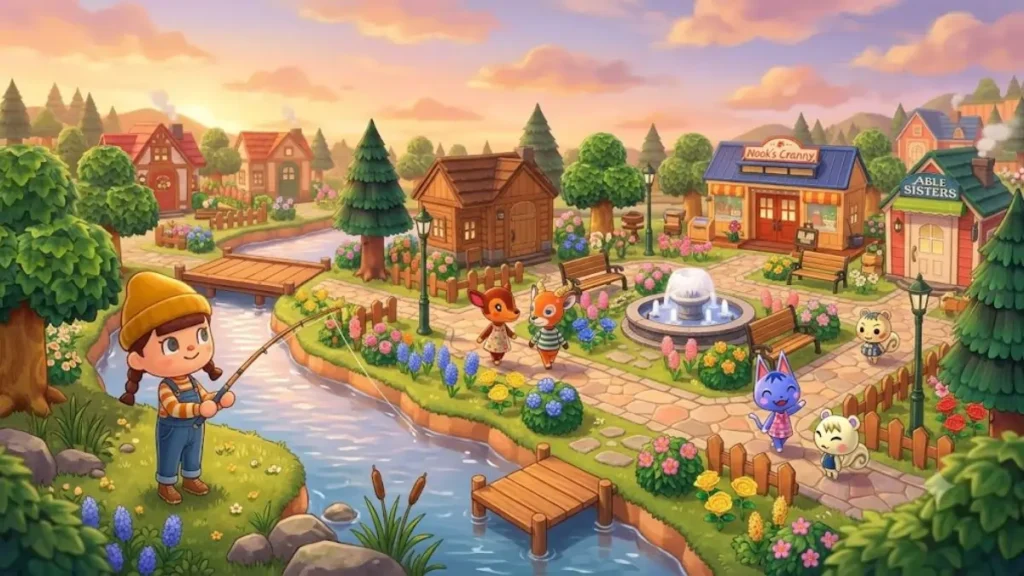
You arrive on a mostly empty island with only a tent, a few basic tools, and two animal neighbors.
At first, your options are limited.
You’ll gather wood, collect fruit, catch fish, and earn Bells—the game’s currency—to pay off your initial home loan.
Rather than overwhelming you with dozens of mechanics, the game introduces new features step by step.
As the days pass, you’ll unlock:
- A proper house
- Better crafting recipes
- Museum construction
- New villagers
- Shops
- Bridges and inclines
- Island customization tools
- Terraforming abilities
This gradual progression keeps the experience approachable, especially for players who are new to simulation games.
Each improvement feels meaningful because you’ve worked toward it naturally instead of unlocking everything at once.
What Makes the Gameplay So Relaxing?
One of the biggest strengths of Animal Crossing: New Horizons is its ability to make ordinary activities feel rewarding.
Fishing isn’t just about collecting fish.
It’s about discovering rare species during different seasons.
Planting flowers isn’t simply decoration.
It becomes part of creating beautiful landscapes that make your island feel alive.
Even talking to villagers becomes part of the experience, as their personalities and daily conversations help the island feel like a living community rather than a static game world.
There are very few situations where the game punishes mistakes.
You don’t lose progress because of failed missions.
You don’t have to worry about enemies attacking your home.
Instead, the game rewards consistency, creativity, and curiosity.
For many players, this slower pace provides a welcome break from competitive multiplayer games and action-heavy adventures.
Editor’s Note
One reason Animal Crossing: New Horizons has remained relevant is that it offers a different kind of progression. Instead of measuring success through higher levels or stronger weapons, it lets players define their own goals. For some, that means completing the museum collection. For others, it means designing the perfect island or simply enjoying a relaxing routine for a few minutes each day. That flexibility gives the game lasting appeal even years after its original release.
The Best Features That Still Make Animal Crossing: New Horizons Special
After spending time on your island, you quickly realize that Animal Crossing: New Horizons isn’t trying to overwhelm you with endless objectives. Instead, it gives you a collection of simple activities that gradually come together to create an experience that’s surprisingly difficult to put down.
Rather than relying on fast-paced action, the game rewards creativity, patience, and personal expression.
Here are the features that continue to stand out.
1. Nearly Unlimited Island Customization
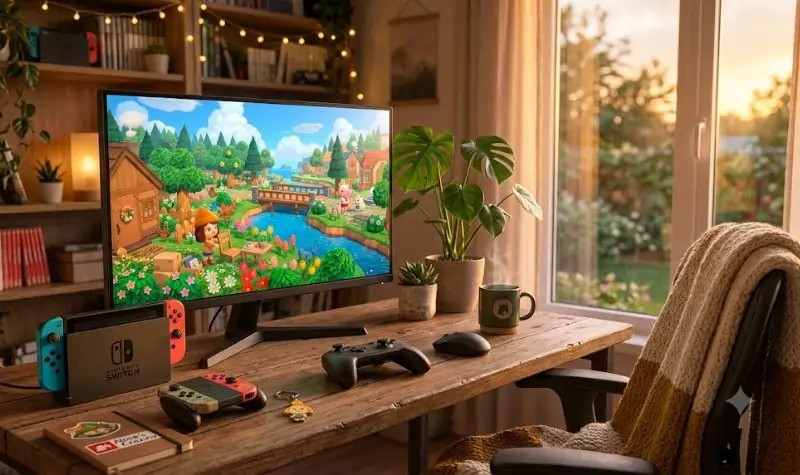
The biggest reason many players continue returning to New Horizons is the freedom to design an island that feels uniquely their own.
You aren’t simply placing furniture inside your house. Eventually, you gain the ability to reshape the landscape itself by creating rivers, cliffs, waterfalls, walking paths, and outdoor neighborhoods.
Every player’s island can look completely different.
Some recreate peaceful Japanese villages.
Others build modern cities, fairy forests, amusement parks, luxury resorts, or even famous locations inspired by movies and TV shows.
Few life simulation games offer this level of creative freedom.
2. Relaxing Gameplay That Never Feels Rushed
Many modern games constantly ask players to complete missions as quickly as possible.
Animal Crossing takes the opposite approach.
There are no countdown timers forcing you forward.
No difficult boss fights.
No pressure to finish the game quickly.
Instead, your daily routine might include:
- Catching a few fish
- Watering flowers
- Visiting the museum
- Talking with villagers
- Decorating your home
- Collecting resources
- Completing small Nook Miles tasks
For players looking to unwind after work or school, this slower pace remains one of the game’s greatest strengths.
3. Seasonal Events Keep the Island Feeling Fresh
One reason players often return throughout the year is the seasonal calendar.
Different months introduce:
- New fish
- New bugs
- Holiday celebrations
- Limited-time furniture
- Weather changes
- Seasonal crafting recipes
Because the game follows the real-world calendar, your island naturally changes over time instead of feeling static.
This system encourages players to check in regularly without requiring long play sessions.
4. One of Nintendo’s Best Creative Sandboxes
Many games advertise “freedom.”
Animal Crossing actually delivers it.
Whether you enjoy interior decorating, landscape design, fashion creation, photography, or collecting rare items, the game allows you to create personal goals instead of following a strict path.
That’s one reason screenshots of beautifully designed islands continue to circulate within the community years after release.
5. Memorable Villagers
More than 400 villagers are available, each with their own personalities, dialogue, hobbies, and favorite gifts.
Although some longtime fans feel earlier Animal Crossing games gave villagers sharper, more varied dialogue, building friendships and watching your island community grow remains one of New Horizons’ biggest attractions. Community discussions often praise the emotional attachment players develop to favorite residents while also noting that personality variety can feel more limited than in older entries.
What Has Aged Surprisingly Well?
Not every game released several years ago still feels modern.
Animal Crossing: New Horizons has aged better than many expected.
The Visual Style
Instead of aiming for realistic graphics, Nintendo chose a colorful art direction.
That decision paid off.
The soft lighting, clean character designs, and charming environments still look attractive on modern displays.
Even players discovering the game for the first time rarely describe it as outdated.
Performance Improvements
Recent updates and newer hardware options have improved the overall experience with smoother performance and quality-of-life improvements, making island management more comfortable than it was at launch.
Accessibility for New Players
One underrated strength is how approachable the game remains.
New mechanics appear gradually.
Crafting isn’t overly complicated.
Menus are easy to understand.
Even someone who has never played a life simulation game can comfortably learn the basics within a few hours.
Endless Personal Goals
Unlike story-driven games that end after the credits roll, Animal Crossing creates its own long-term motivation.
Players often choose goals like:
- Completing the museum collection
- Designing a five-star island
- Collecting every fish
- Finding favorite villagers
- Completing furniture collections
- Decorating every room
There is always another small project waiting whenever you return.
Honest Drawbacks You Should Know
No game is perfect.
One weakness of many reviews is that they focus only on the positives.
If you’re considering buying Animal Crossing: New Horizons today, it’s important to understand where it may not meet your expectations.
Slow Progression Isn’t for Everyone
Progress happens gradually.
Buildings take time.
Construction often completes the next day.
Certain resources become available only after unlocking new milestones.
For players who enjoy immediate rewards, this pace may feel frustrating.
However, if you enjoy relaxing games where progress builds naturally over time, it can become one of the game’s biggest strengths.
Repetition Can Appear Later
The early game constantly introduces new mechanics.
After dozens—or even hundreds—of hours, however, many daily activities become familiar.
Fishing, gathering resources, and completing daily routines can start to feel repetitive if you don’t create new personal goals.
This is one of the most common criticisms shared by experienced players and reviewers.
Limited Challenge
Animal Crossing isn’t designed to test your combat skills or strategic thinking.
There are no dangerous enemies roaming your island.
No difficult puzzles.
No high-pressure encounters.
If you’re looking for excitement similar to an action RPG or survival game, this isn’t the right choice.
The challenge comes from planning, collecting, decorating, and improving your island—not from overcoming difficult gameplay mechanics.
Some Players Miss the Older Series’ Personality
Among longtime fans, one recurring discussion is that earlier Animal Crossing games featured more mischievous villager dialogue and a stronger life-simulation focus, while New Horizons emphasizes customization and island design. That doesn’t make the newer game worse—it simply means the series has shifted priorities.
Editor’s Insight
One mistake many reviews make is treating Animal Crossing: New Horizons like a traditional game that should be “completed.”
In reality, it’s closer to a hobby than a campaign.
The players who enjoy it the most are usually those who don’t rush through every objective. Instead, they return for short, relaxing sessions, gradually improving their island over weeks or months. If you expect constant excitement, you may lose interest quickly. But if you enjoy creativity, routine, and setting your own goals, the game continues to offer remarkable long-term value.
Why Animal Crossing: New Horizons Is Still Worth Playing Today
Years after its original release, Animal Crossing: New Horizons remains one of those rare games that doesn’t feel tied to a specific year. While many life simulation games lose their charm after the main objectives are complete, New Horizons continues to attract both returning players and newcomers.
One reason is its relaxed gameplay loop. There is no pressure to rush through missions or compete with other players. Instead, the game encourages you to play at your own pace. Whether you spend ten minutes collecting shells or several hours redesigning your island, progress always feels rewarding.
Nintendo’s seasonal events also help keep the experience fresh. Throughout the year, different festivals, holidays, fish, insects, and special items appear, giving players a reason to check back regularly.
Best Features That Make Animal Crossing: New Horizons Special
1. Complete Island Customization
Perhaps the biggest improvement over previous Animal Crossing games is the ability to shape your entire island.
Players can:
- Build bridges and inclines
- Move houses and shops
- Terraform rivers and cliffs
- Create custom paths
- Design outdoor cafes, parks, beaches, forests, and cities
The amount of creative freedom is incredible. Every island can look completely different from another.
2. Hundreds of Furniture Items
Decorating is one of the game’s biggest strengths.
You’ll find furniture inspired by:
- Modern homes
- Japanese culture
- Medieval castles
- Space themes
- Pirate adventures
- Farms
- Fantasy worlds
- Holiday celebrations
Combined with custom patterns designed by the community, the possibilities become almost endless.
3. Relaxing Daily Activities
Some days you may simply want to relax.
Popular daily activities include:
- Fishing
- Catching bugs
- Diving underwater
- Watering flowers
- Harvesting fruit
- Talking with villagers
- Visiting mystery islands
- Shopping for new items
There are no penalties for taking things slowly, making it one of the most stress-free games available.
4. Charming Villagers
The villagers are the heart of Animal Crossing.
Each animal has:
- Unique personalities
- Different hobbies
- Funny conversations
- Personal homes
- Favorite clothing styles
Over time, they begin to feel like genuine neighbors rather than simple NPCs.
Many players become attached to specific villagers and spend months searching for their favorites.
5. Multiplayer Fun
If you have friends who also own the game, multiplayer adds another layer of enjoyment.
You can:
- Visit each other’s islands
- Exchange furniture
- Trade fruit
- Host island tours
- Organize fashion shows
- Play hide-and-seek
- Celebrate birthdays together
Even casual visits often create memorable moments.
Tips for New Players
Starting your island can feel overwhelming, but a few simple habits make progress much smoother.
Don’t Spend Bells Too Quickly
Save your Bells early on.
Important upgrades like house expansions, bridges, and storage become expensive later.
Collect Resources Every Day
Gather materials daily, including:
- Wood
- Stone
- Iron Nuggets
- Clay
- Tree branches
These resources are needed for crafting and construction.
Donate Everything New
Whenever you catch a new fish, insect, fossil, or sea creature, donate the first one to the museum before selling extras.
Your museum fills up faster, and you’ll thank yourself later.
Visit Mystery Islands
Using Nook Miles Tickets lets you discover new islands where you can:
- Find rare resources
- Meet potential villagers
- Collect different fruits
- Catch seasonal creatures
These trips are one of the best ways to expand your island early in the game.
Upgrade Storage Regularly
Inventory space fills up surprisingly fast.
Expanding your home storage keeps your island organized and saves time in the long run.
Is Animal Crossing: New Horizons Good for Kids?
Absolutely.
The game contains:
- No graphic violence
- No mature themes
- Positive social interactions
- Creative building mechanics
- Educational elements about nature, insects, fossils, and fish
Parents often appreciate that children can enjoy hundreds of hours of gameplay without aggressive combat or inappropriate content.
Is Animal Crossing: New Horizons Good for Adults?
Many adults actually make up a large portion of the player base.
After work or school, the peaceful atmosphere offers a welcome break from fast-paced competitive games.
Players often describe it as a cozy way to unwind, especially when they only have a short amount of free time.
Common Questions Players Ask
Can You Play Offline?
Yes.
Most features work perfectly offline. An internet connection is mainly needed for visiting friends online, downloading custom designs, and receiving certain updates.
Can You Restart Your Island?
Yes, but restarting deletes your current island and all of your progress. If you’ve invested many hours into building and collecting, think carefully before starting over.
Is There Combat?
Very little.
Unlike survival or action games, Animal Crossing focuses on creativity, exploration, collecting, decorating, and social interaction rather than fighting enemies.
How Long Does the Game Last?
There isn’t a traditional ending.
Some players enjoy it for 50 hours, while others continue playing for hundreds—or even thousands—of hours as they redesign their islands and take part in seasonal events.
Final Thoughts
Animal Crossing: New Horizons continues to stand out because it offers something many modern games don’t: a peaceful experience without pressure. Whether you’re decorating your dream island, chatting with friendly villagers, completing your museum, or simply relaxing with a fishing rod in hand, the game lets you enjoy every session at your own pace.
If you’re looking for a cozy life simulation that rewards creativity, encourages exploration, and stays enjoyable long after your first week of play, Animal Crossing: New Horizons remains one of the best choices available. Its timeless design, charming community, and endless customization make it a game that’s easy to recommend to both newcomers and longtime fans alike.
Frequently Asked Questions (FAQs)
Is Animal Crossing: New Horizons worth buying in 2026?
Yes. Even in 2026, Animal Crossing: New Horizons remains one of the best life simulation games available on Nintendo Switch. Its relaxing gameplay, endless customization, seasonal events, and creative freedom give it excellent long-term value for both new and returning players.
Can you play Animal Crossing: New Horizons without Nintendo Switch Online?
Yes. You can enjoy the main game completely offline. However, a Nintendo Switch Online membership is required if you want to visit friends’ islands online, trade with players over the internet, or download many community-created custom designs.
How many villagers can live on your island?
Your island can have up to 10 animal villagers at the same time, along with special NPCs like Tom Nook, Isabelle, and the Able Sisters who manage island services and shops.
Is Animal Crossing: New Horizons an open-world game?
Not in the traditional sense. Instead, it offers an open-ended sandbox experience where you’re free to explore, decorate, collect items, complete daily activities, and redesign your island without following a strict storyline.
Can you change your island after starting the game?
Yes. While your island’s overall map and airport location remain fixed, you’ll eventually unlock Island Designer, which lets you terraform cliffs, create rivers, lay custom paths, and reshape large parts of your island.
Does Animal Crossing: New Horizons have an ending?
No. There is no final boss or traditional ending. After completing the main island development goals, the game becomes an ongoing life simulation where you can continue decorating, collecting, participating in seasonal events, and interacting with villagers for as long as you like.
Is Animal Crossing: New Horizons suitable for beginners?
Absolutely. The game introduces new mechanics gradually, making it one of the most beginner-friendly simulation games available. There are no difficult combat mechanics or complicated skill trees to learn.
Can you play Animal Crossing: New Horizons with family members?
Yes. Multiple player profiles on the same Nintendo Switch can share a single island. Each player gets their own house and character while contributing to the shared island’s growth.
Conclusion
Few games have built such a loyal community as Animal Crossing: New Horizons. Rather than relying on fast-paced action or constant competition, it creates a welcoming space where players can slow down, express their creativity, and enjoy small moments that make their island feel personal.
Whether your goal is designing the perfect village, completing the museum, collecting every seasonal item, or simply spending a few peaceful minutes fishing after a busy day, the game continues to deliver an experience that feels rewarding every time you return.
For players searching for a relaxing Nintendo Switch exclusive with exceptional replay value, Animal Crossing: New Horizons remains an easy recommendation. Its charming world, lovable villagers, and nearly limitless customization ensure it will continue to be one of Nintendo’s most beloved games for years to come.